Local Consequences of Social Travelling

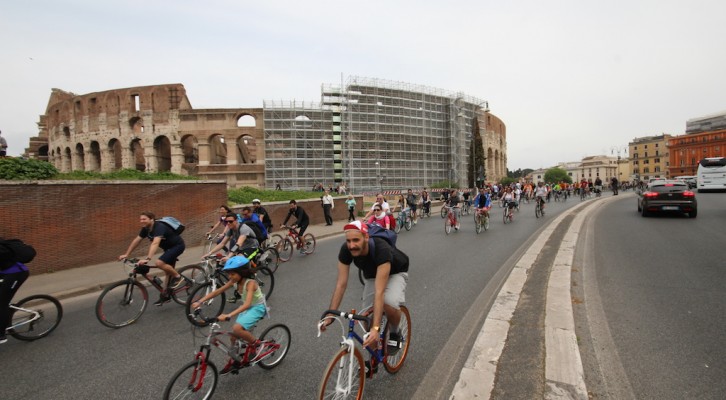
Jolien Groot is contemplating new urban issues in Amsterdam and New York City that occur because of social travelling networks. Continue reading

What can Urbanism Learn from Protest Culture?

Two new authors, Viktoria and Dominique, explore protest culture in St. Pauli, Hamburg, where people group to battle the urban transformations of the city's district. Continue reading

Crossroads: Future Development of Amsterdam

Thijs Koolmees is discussing future of Amsterdam: how will the city develop itself in the near future, and which scenario is most desirable? Continue reading

Dark Market: After Hours in Yau Ma Tei

Adam Nowek (@adamnowek) takes his camera for a late-night urban exploration session at the Yau Ma Tei Fruit Market. Continue reading

One Year of Prototyping the City

In this post we celebrate the first year of existence of The ProtoCity Blog, by prototyping the city in retrospective of our articles. Continue reading

Local Consequences of Social Travelling

Posted on by Jolien Groot in Human Geography | 3 Comments

Rich Travel Experiences to Poor Housing Markets?

The entire ProtoCity team has spent a large part of 2012 in a foreign city and we all faced the same problem: finding a place to live in a foreign city is hard. Thankfully, the internet is a great tool for finding a new roof over your head, even when you are not on your new location yet. Platforms such as Craigslist, Wimdu, Airbnb and Couchsurfing are making far away places more accessible.

A lovely AirBnb listing in Amsterdam (source: AirBnb.com)

A lovely AirBnb listing in Amsterdam (source: AirBnb.com)

I had the great opportunity to visit New York City from August until January, and together with my travel companion, I had arranged accommodation for the first two weeks of our stay. We found a very nice guy via Airbnb who was willing to rent out an extra room in his neat Harlem-based apartment. At first, we were a little hesitant about whether staying with a total stranger is a very stupid and dangerous or rather a very clever move. However, as soon as we had met our local host, we knew we had made a great decision. We immediately got a feel of ‘what it was like’ to live on Manhattan, and we had someone who could tell us how to get around, where to and where not to look for a place to live. Continue reading

What can Urbanism Learn from Protest Culture?

Posted on by Viktoria Scheifers & Dominique Peck in Urban Planning & Design | 2 Comments

Protest culture week in St. Pauli, Hamburg.

This week, we are pleased to welcome two new authors, Dominique Peck and Viktoria Scheifers, who are both Urban Design (M.Sc.) students at HafenCity University Hamburg. They have been working on the project “Hotel Wilhelmsburg” at Urban Design´s 1:1 laboratory and interdisciplinary education-research project Neighborhood’s University (UdN). Today’s article is the first of a series on this project.

We are standing in front of the stadium of FC St. Pauli, the district’s cult soccer club. They just lost another game. Together with us are about 1.400 people waiting for an announcement. Most of them are dressed in black or brown hoodies with skulls printed on them, FC St. Pauli’s mark; some enjoy a beer in the sun, some hand out flyers, and others watch what’s going on from a safe distance with their backs to an exterior wall. Finally, a voice roars out of speakers mounted to a truck with a banner. The upcoming 10 minutes of speeches mark the start of Protestkulturwoche (protest culture week) in St. Pauli.

Demonstrators gather in front of FC St. Pauli´s soccer stadium

Continue reading

Crossroads: Future Development of Amsterdam

Posted on by Thijs Koolmees in Labour & Urban Economics, Urban Planning & Design | Leave a comment

Amsterdam is in great shape! Everywhere I attend lectures and seminars of urban professionals this statement is made, before more detailed issues are discussed. And quite frankly, those professionals are not mistaken. After an extensive era of urban renewal and suburban flight, in the late 1980s the city and region recommenced developing economically in line with ideas of Florida and Glaeser: the service economy took shape with Schiphol Airport and no longer the harbour as its engine, with students, entrepreneurs and office workers and no longer industrial workers as its fuel. After hitting rock-bottom the population started growing again after 1985:

Amsterdam population development 1960-2012. Source: O+S Amsterdam

Amsterdam population development 1960-2012. Source: O+S Amsterdam

And Amsterdam has increasingly become a city of the highly educated workforce:

Education levels of Amsterdam, the region and the country 1970 - 2009. Source: O+S Amsterdam

Education levels of Amsterdam, the region and the country 1970 – 2009. Source: O+S Amsterdam

Economically Amsterdam started to catch up with the country as a whole, and the city and region are in fact outperforming the country in the recent crisis-ridden years:

Economic growth of Amsterdam, the region and the country 1980-2012. Source: O+S Amsterdam

Economic growth of Amsterdam, the region and the country 1980-2012. Source: O+S Amsterdam

However, there is a flip side to this story, a nuance in need of clarification. Continue reading

Dark Market: After Hours in Yau Ma Tei

Posted on by Adam Nowek in Labour & Urban Economics, Photography | 2 Comments

121101.006 by Adam Nowek

121101.006 by Adam Nowek

Hong Kong is a city of vertical neighbourhoods, scraping the clouds with their pencil-thin towers. One such neighbourhood, Yau Ma Tei (油麻地), is located on the Kowloon side of the city, and is a distinctly more local, more Chinese part of town. Yau Ma Tei is a collage of 1960s-era high-rise, wholesale retail spaces, and street vendors hawking local delicacies and imitation goods. Amidst the density, however, there is one section of buildings with ceilings much closer to the ground than its immediate surroundings.

121101.003 by Adam Nowek

121101.003 by Adam Nowek

Continue reading

One Year of Prototyping the City

Posted on by The ProtoCity Editorial Team in Uncategorized | 3 Comments

Continue reading

Vang Vieng: Laos’s Abandoned Party Capital

Posted on by Jorn Koelemaij in Crazy Shit, Human Geography | 1 Comment

The Death and Life of a Laotian City

Vang Vieng. With 30.000 inhabitants the 8th largest city of Laos, situated in a stunningly beautiful valley, directly at the Nam Song River, surrounded by a picturesque karst hill landscape. Perhaps relatively unknown by the average urbanist, though since a couple of years very famous among young, hedonistic backpacking tourists. After some years of rapid expansion in a somewhat anarchistic way, the ruling socialist party of Laos recently pulled on the handbrake deciding to shoot down its main attraction. In this article, I will describe the sudden rise, as well as the current uncertain future of Vang Vieng: Southeast Asia’s contested party capital.

Downtown junction in Vang Vieng, by Jorn Koelemaij

Downtown junction in Vang Vieng (Photo: Jorn Koelemaij)

Continue reading

Clustering Shenzhen: Art and Culture at OCT Loft

Posted on by Adam Nowek in Labour & Urban Economics, Urban Planning & Design | Leave a comment

The extreme pace of China’s urban development has garnered considerable attention: manufactured cities for areas with staggering growth rates are created at a massive scale, dotting the Chinese map. Amidst the chaos, though, there are instances of cohesive urban planning that forecast the dilemmas and address them with solutions that foster sustainability, creativity, and liveability.

A meeting point for art, design, and retail

OCT-Loft: A meeting point for art, design, and retail (Photo: Adam Nowek)

One case is in Shenzhen, an extreme case. Once merely an insignificant fishing town next to Great Britain’s remaining Asian outpost at Hong Kong, Shenzhen now dwarfs Hong Kong in terms of population, and, increasingly, in terms of global economic progress. Shenzhen has undergone remarkable development since the 1980s: the establishment of special economic zones and the subsequent mass migration that followed have ensured Shenzhen’s bombastic emergence on the world stage. Continue reading

Feeding Amsterdam: Impressions from a Food Tour

Posted on by Susu Dobner in Human Geography, Urban Sociology | 1 Comment

What to do on the coldest Saturday, 24th of March in the history of Holland? You join the ‘Old Amsterdam Food’ tour – Well at least that’s what we did with no regrets, and only half-frozen toes. This week the Tour welcomed a special guest, Carolyn Steel (a London-based architect, food enthusiast and author of ‘The Hungry City: How Food Shapes our Lives’ (2008)  as part of the Food Film Festival 2013.

The tour began at De Waag, Nieuwmarkt, where the gate once served as a passage between the countryside and the old city of Amsterdam. A symbolic location to start the tour and to realize how much the City has expanded since its Golden Age in the 17 Century.

tourde waagWe then proceeded to Oude Kerk where we learned about how the Netherlands became Europe’s first industrial grain traders in the 17th century by exporting grain from Gdansk, also known as Danzig, the bread basket of Europe. We discovered that each canal had a commercial purpose to allow for easy access to commodities including vegetables, fish (especially herring), and grains – there was even one canal designated for the sole purpose of stocking Amsterdam’s thirst of beer! Next time you are enjoying a cold beer think about this: today’s beer culture in Amsterdam, and more generally in Western Europe can be attributed to the former issues concerning potable water – we clearly went down the beer route, whereas Asia took the tea route in order to purify their water supply.

Continue reading

Amsterdam Losing Its Bike Capital Title

Posted on by Rothar Kolesa in Crazy Shit, Human Geography, Labour & Urban Economics, Photography, Urban Planning & Design, Urban Sociology | 3 Comments

Amsterdam’s bicycle culture at stake

This article was meant as an April Fool’s Day article. Read more at the bottom of this article.

This article is about bicycling in the true global bicycle capital: Amsterdam. But I will not write about success stories, I will write about a negative process which will only harm the most environmental friendly mobility. Amsterdam rocks a 34% bicycle modal share, an enormous share compared to EU averages, especially considering the size of the city (ca. 800.000 inhabitants). The vast amounts of bicycle infrastructure together with a mindset of the traffic road user and car restricting policies make the bicycle truly the fastest modality in Amsterdam.

The modal split of some large cities. Source: Pucher & Buehler, 2012

The modal split of some large cities. Source: Pucher & Buehler, 2012
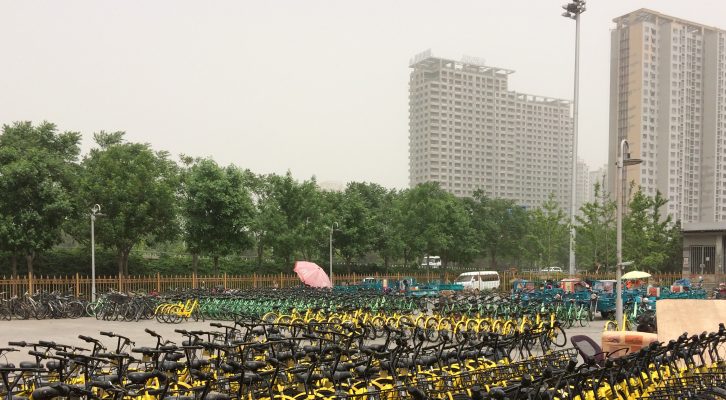
The city is an example of a successful bicycle city and its policies are copied around the world. There even is a Dutch Bicycle Embassy (Idea inspired by Denmark). But things are changing, in a way that the city will not deserve to carry the title of bicycle capital. These changes are a reaction to the so called lawlessness of bicycling in the city (see video, in which it is praised). These unwritten rules are known for the citizens, but unknown for the outsider. Every Amsterdam citizen knows that traffic lights are not meant for them, that ringing a bell to warn his or her approach to a group of tourists is useless as they will only start to run panicky in circles, that they always have right of way, on pedestrian crossings and versus cars or any other moving vehicle including other bicycles. Every wall or pole is a potential parking space, even that little space between two bicycles in a rack can be used, especially at the Central Station three layer parking deck. People have no idea rules actually exist, as they do not have any drivers license (I also don’t, so why should I care about rules) and cycling home completely drunk from a party, not remembering anything of the way home, including the trip to the shoarma fastfood joint, is completely normal and the weekend’s stories of losing the way in Amsterdam-West and Osdorp are shared on the Mondays either at work or in class.

Therefore the traffic agency of the municipality has decided that drastic changes are needed. After the idea by the city centre district to put chips into all bicycles to counter illegal parking, the proposal to introduce paid bicycle parking and adding number plates to bikes. Their latest Mobility Plan consist of a future set of strategies to counter the previously mentioned lawlessness and anarchistic bicycling for once and for all. Lets take a look at the most destructive components of the plan:

Cleaning the canals in 1963 (picture by ANP Historisch Archief)

Cleaning the canals in 1963 (picture by ANP Historisch Archief)

Continue reading

Geography Matters: The Case of Nieuwendammerdijk

Posted on by Leon van Keulen in Human Geography, Photography | Leave a comment

This is a tale of geography. It is a tale about space and how important that is for our understanding of the social reality around us. In academic terms, you would say: spatial causality. What that means? Good question. It means how the physical space around us affects everyday life. Most of the time, researchers look for explanations within either the historical background (historical causality) or the current social circumstances (sociological causality). Although highly relevant, not that many use a real spatial perspective to shed light on certain urban issues. And that’s a shame. At least, that is what great urban thinker Edward Soja argues in his book Seeking Spatial Justice (2010). And I am perfectly fine with following his bright thinking.

This article will show you why place (and geography for that matter) is so important to understand the world around us. It will succeed in that by using a case of modest rurality within the urbanity of Amsterdam: the case of the Nieuwendammerdijk. This article comes out of my own (ethnographic) research done in 2010.

Glimpse of the Nieuwendammerdijk

Lets get acquainted with the Nieuwendammerdijk. Continue reading